


Nine Days to Tokyo — An Inspiring Interview with a Retired Pilot About Bolesław Orliński’s Historic Achievement
🕗 4 minutes | August 26, 2026 | Krzysztof Moczulski in an interview with Captain Stanisław Błasiak, a retired LOT Polish Airlines pilot
On 27 August 1926, a Bréguet XIX took off from Warsaw’s Pole Mokotowskie with Lieutenant Bolesław Orliński on board. Nine days later, the aircraft landed in Tokyo. We speak with Captain Stanisław Błasiak, a retired LOT Polish Airlines pilot, about the man who symbolically opened the way to Japan for Polish aviation.
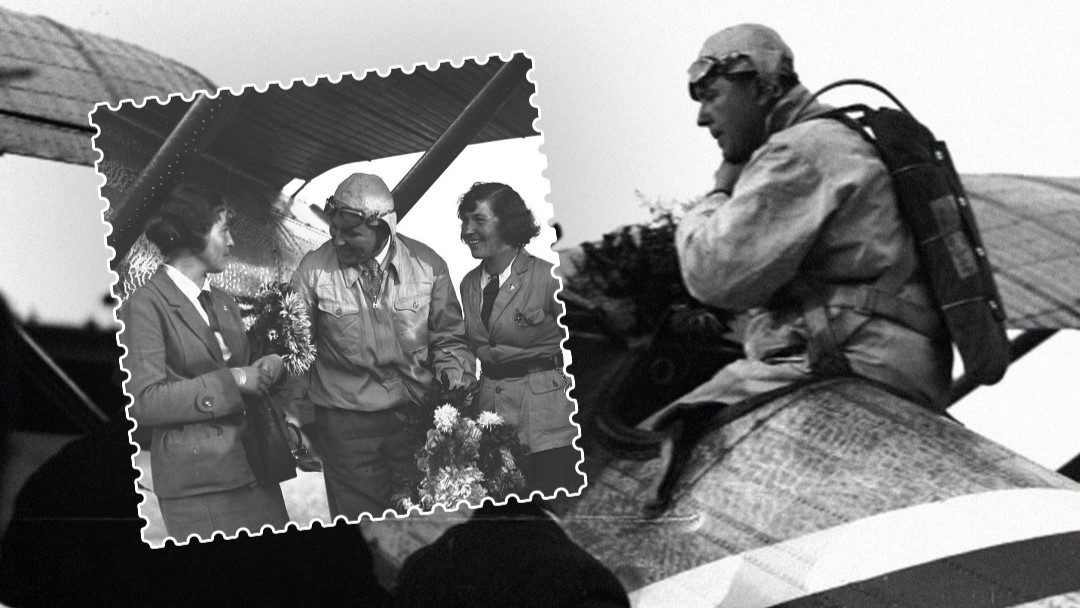
You had the good fortune to meet Lieutenant Bolesław Orliński and to see in him not only an outstanding aviator, but also a soldier, a patriot and a man of remarkable determination. Your meeting took place just a few days before his death. How do you remember him?
It was 13 February 1992. I visited him in Mississauga, near Toronto, at the Wawel Villa retirement home. Before that, we had been in touch by letter and telephone, thanks to the help of his sister, Amelia Orlińska-Kudrewicz, whom I had met at Gądów Mały airfield in Wrocław on 25 May 1966. At the time, I had the pleasure of taking her on a one-hour glider flight over the city.
For that one and only meeting with Mr Bolesław, I brought greetings from General Stanisław Skalski, as well as gifts from his sister Amelia and her daughter Zofia. The Lieutenant was almost 93 years old, in poor health and mainly confined to a wheelchair. And yet, you could sense his immense dignity, boundless nobility and inner strength. He spoke calmly and precisely — like a pilot who knows that every thought should have meaning.
Whenever his memories turned to flying, however, he immediately regained his energy. He told wonderful stories, mainly about his combat flying during the war and the dramatic events associated with it. We spent three hours together in the company of Marian Fijał, president of the Warsaw Wing in Toronto, who looked after Mr Bolesław, and my friend, test pilot Zdzisław Bylok, with whom I had come to Wawel Villa.
I recorded nearly an hour of film while also taking photographs. At the time, we did not know that these might be the last photographs of him ever taken. Fifteen days later, Bolesław Orliński passed away.

Where did the strength of character, courage and sense of duty that you saw during that conversation come from?
He was a military, commercial, sport and test pilot, but above all, he was a man devoted to service. He was born in 1899 in Podolia, into a family with strong patriotic traditions. As a subject of the Russian Empire, he volunteered for the Russian army on 15 May 1916. He later fought in the 1st Polish Corps, formed in Minsk in August 1917, and once again volunteered to fight in the Polish–Soviet War, from 1919 until August 1920.
He had dreamed of flying since 1909, when the Russian pilot Sergei Utochkin came to Kamianets-Podilskyi. His demonstration flights in a Farman IV aircraft filled the crowds with admiration and amazement — including young Bolek, who became fascinated with aviation. He was only able to pursue that dream ten years later in Bydgoszcz, after the wars mentioned above.
He became an instructor, including in aerobatics. On one occasion, as part of a wager, he performed 242 consecutive loops in a single flight. As a test pilot, he flew prototypes of Polish aircraft, making the maiden flight of 23 of them.
During the Second World War, he once again volunteered for service. He commanded No. 305 Polish Bomber Squadron and flew 49 combat missions. He combined courage with discipline and daring with thorough preparation. He was not merely the hero of a single long-distance flight. He helped shape the ethos of Polish aviation, becoming a role model for young people eager to pursue flight training. He stood out for his exceptional flying skills.
These experiences were leading Orliński towards the greatest challenge of his life up to that point. How did the journey to Tokyo begin?
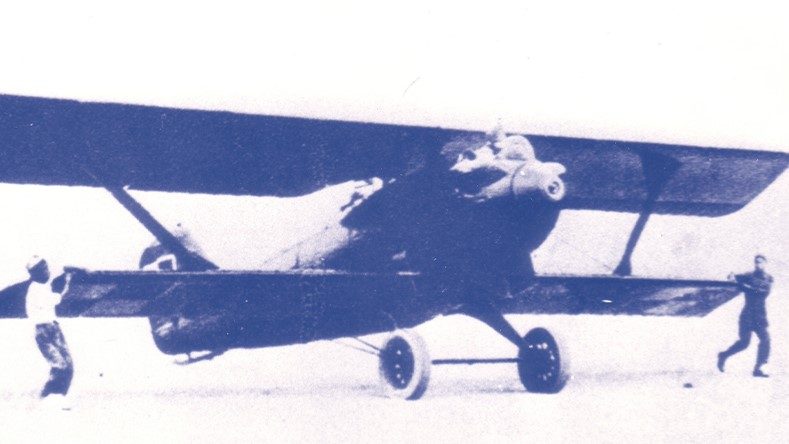
The flight was proposed by the then Colonel Pilot and Engineer Ludomił Rayski, head of the Department of Aviation. Orliński and Kubiak took off from Pole Mokotowskie in Warsaw at six o’clock in the morning on 27 August 1926. They flew a standard-production Bréguet XIX with open cockpits. They had no radio, oxygen system, modern instruments for flying without visual reference, or parachutes. What they did have were maps, a compass, their own skills and the awareness that much of the route stretched across vast, uninhabited expanses.
On the first day, they reached Kazan via Moscow. The weather deteriorated rapidly, night fell, and they found the airfield only thanks to three large bonfires lit by the ground crew. From there, they continued across the immense expanses of Russia and Siberia, then through Manchuria, China and Korea.
After nine days and nine flights, they landed in Tokyo on 5 September, where they were welcomed as heroes. The Imperial Aviation Society awarded them gold medals, while the crew received the Orders of the Rising Sun. Their non-stop flight from Seoul to Tokyo was of particular significance — the first such flight in history.

The flight to Japan was already a remarkable achievement, but the real test awaited the aviators on their return journey. What happened after they left Tokyo?
The return journey proved even more difficult. Over the Sea of Japan, they battled storms, cloud cover and severe turbulence. A failure of the oil system forced them to land hundreds of kilometres short of their planned airfield. Later, while still on the ground, a violent gust of wind damaged the propeller and the lower wing of the anchored aircraft.
They still had around 6,700 kilometres to cover before reaching Warsaw. They could have continued their journey by train, but Kubiak repaired the propeller using glue and wire, while the two aviators shortened the damaged lower wing and stripped away part of the covering from the opposite lower wing in an attempt to restore the aircraft’s aerodynamic balance. In this condition, they continued their journey.
On 25 September, after completing 12 flights from Tokyo, they landed at Pole Mokotowskie in Warsaw, where they were greeted by cheering crowds. They had covered 22,600 kilometres and spent exactly 121 hours and 16 minutes in the air.
The aircraft returned with a damaged wing, a cracked propeller and an engine worn almost to the limit. After inspecting the machine, it was estimated that it might not have withstood even another few dozen minutes of flight. That was how fine the line was between a great success and failure.

Orliński and Kubiak made it back to Warsaw despite damage that had nearly made further flight impossible. Why did their achievement attract such widespread attention around the world?
Poland had been an independent state for less than eight years. It needed symbols showing that it was capable not only of rebuilding the country, but also of taking part in the global race for technological and civilizational progress. The flight had sporting, technical, diplomatic and symbolic significance.
The world saw a Polish pilot and a Polish mechanic accomplish, in a standard-production aircraft, something that had previously been regarded as almost impossible. They were received in Japan with the highest honours, and the international press reported extensively on their journey. This happened almost a year before Charles Lindbergh’s solo flight across the Atlantic.
For young Poles, Orliński became proof that boundaries could be pushed through knowledge, hard work and courage. General Skalski later said that pilots like him had served as a compass for his generation.

A hundred years have passed since that expedition. How much has the journey between Warsaw and Tokyo changed — and what, despite everything, has remained the same?
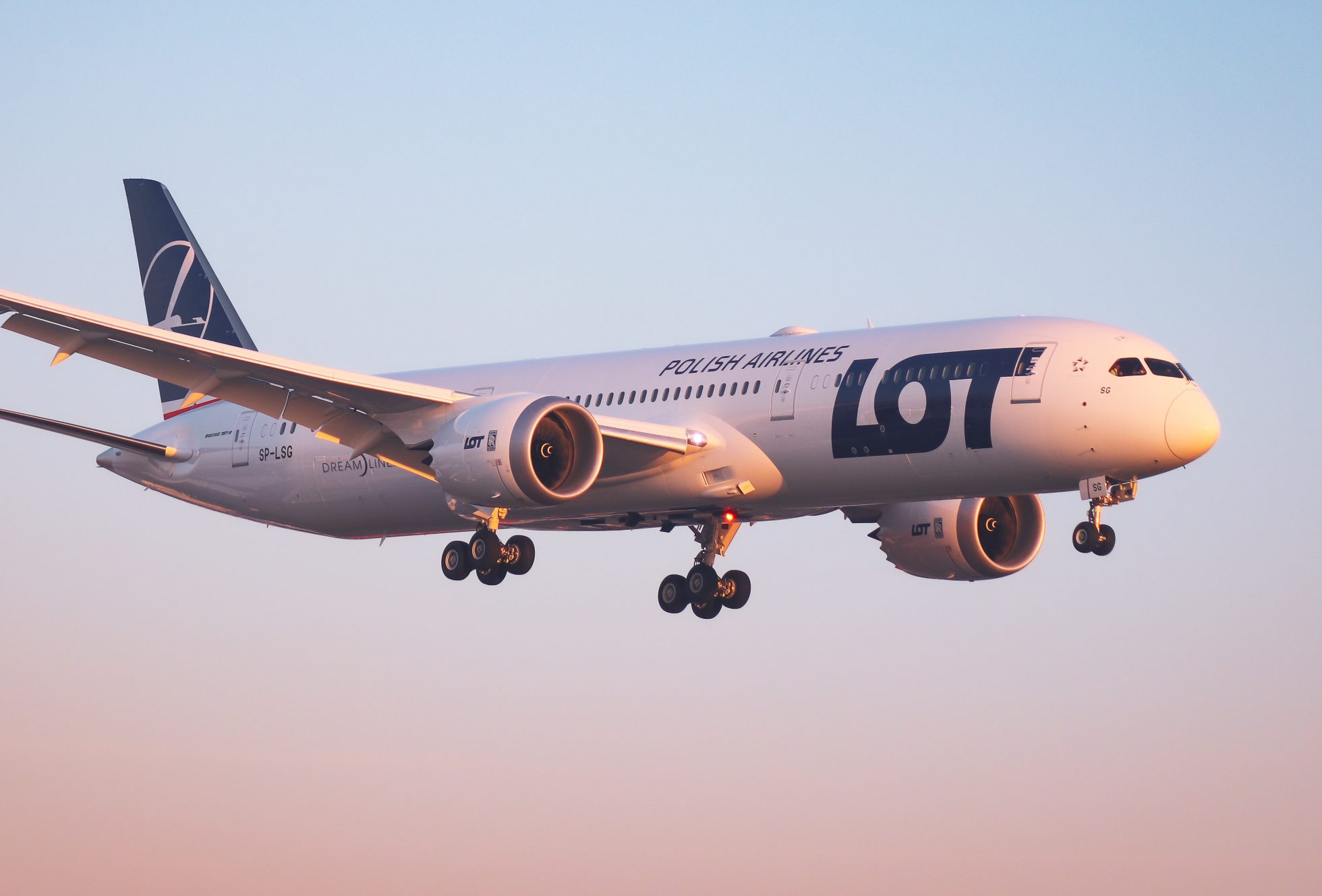
Back then, reaching Tokyo took nine days, while the entire expedition lasted almost a month. Today, aDreamliner flight from Warsaw to Tokyo takes approximately 12 hours and 40 minutes according to the schedule. Passengers travel in a comfortable, pressurised cabin, while the crew relies on advanced navigation and safety systems to conduct the flight.
Technologically, these are two completely different worlds, but the essence remains much the same: aviation shortens the distance between people, cultures and continents. On 13 January 2016, LOT launched its regular non-stop service between Warsaw and Tokyo. What for Orliński and Kubiak had been a journey at the very limits of human and technological capability has become a safe, regular journey — a fitting culmination of what they achieved.

On the one hand, Bolesław Orliński is a monumental figure; on the other, he was a man of flesh and blood. Which aspects of his character are worth preserving today?
Courage, but not recklessness. Determination combined with knowledge and responsibility. Orliński took risks because he was exceptionally well prepared and trusted the people he worked with. He did not set out to build his own legend — he simply carried out the tasks entrusted to him as well as he could. That was how he understood service and patriotism. And that is something we can still learn from him today.
Looking back on the flight 50 years later, he shared the following reflection: “I believe that the spirit of an endeavour dreamed of since boyhood, faith in the importance of the task entrusted to us, and a sense of duty — all merging into one and creating within a person that optimum we call determination — are capable of overcoming many physical obstacles that might seem impossible to surmount. At times, they are stronger than the fear of the Great Unknown — death.”
Bolesław Orliński’s Achievement in Numbers
The key figures that define Bolesław Orliński’s achievement as historic:
- 8 stopovers — the number of stages it took to travel from Warsaw to Tokyo
- 121 hours and 16 minutes — the total time spent in the air
- 22,600 km — the total distance covered during the expedition
- 9 days — the time it took to travel from Warsaw to Tokyo
- 21 flight stages — the total number of legs on the round trip
You can also read the interview in the August issue of our inflight magazine, Kaleidoscope.
Book your flights to Tokyo and fly non-stop aboard a modern Dreamliner in one of three travel classes: